
Is Your Himalayan Salt Safe? Why Sourcing Is the Real Story

If you've searched "Himalayan salt" lately, you've probably noticed the conversation has shifted. It's not just about pretty pink crystals and wellness rituals anymore — it's about lead, arsenic, cadmium, microplastics and other elements. Watchdog reports and lab tests have been circulating, and for good reason: people want to know what they're actually putting on their food.
We're not going to tell you those concerns are baseless. They're not. But we are going to walk through what the data actually shows, where the panic headlines oversimplify things, and why "natural" doesn't automatically mean "unregulated." Then we'll explain why facility certification — not geology alone — is what actually determines whether the salt in your kitchen is safe.
Facility certification — not geology alone — is what actually determines whether the salt in your kitchen is safe.
Does Himalayan Salt Contain Heavy Metals?
Because all salts are sourced from the earth or sea, there is always trace amounts of heavy metals that show up in the majority of tested samples. That's a geological phenomenon. Himalayan salt was deposited roughly 250 million years ago, and the mineral-rich earth it came from naturally carries trace elements. Here's the part that gets left out of the panic headlines: presence isn't the same as danger.
The peer-reviewed comparisons and regulatory testing available so far generally find that trace element and radionuclide levels in Himalayan salt remain within recognized safety thresholds for normal dietary use.
The exceptions that do show up tend to be brand-specific — meaning sourcing, processing, and quality control are exactly where the real differences live. In other words, the question was never really "is Himalayan salt safe?" It was always "whose Himalayan salt, processed how, tested by whom?"
The real question is "whose Himalayan salt, processed how, tested by whom?
Does Himalayan Salt Have Prop 65 Warnings?
California's Prop 65 requires warning labels on products containing certain chemicals above specific thresholds, including lead. Most published testing on Himalayan salt reports levels that don't exceed Prop 65 daily-serving thresholds at typical dietary intake but exceptions exist where individual brands have tested above those limits.
This is precisely why brand-level transparency matters more than blanket reassurances about "Himalayan salt" as a category. A Prop 65 warning (or the absence of one) reflects a specific product, tested at a specific time, from a specific facility — not the entire category of pink salt sold worldwide.
What About Microplastics? Is Rock Salt Really Cleaner Than Sea Salt?

The common claim is that because Himalayan salt is mined, not harvested from the ocean, it must be free of the microplastic pollution affecting sea salt. The logic sounds reasonable: no ocean exposure, no ocean plastic.
In practice, the research is more mixed than that. Rock salt deposits may start out essentially free of plastic, but the equipment and handling involved in extracting and preparing the salt can introduce microplastic particles along the way. So the ancient, sealed origin of Himalayan salt does give it a real structural advantage over sea salt when it comes to ocean-sourced contamination — but that advantage can be undone by an uncontrolled supply chain after the salt leaves the mine.
Why Facility Certification Is the Real Safety Story
Most of the industry pitches purity based on the salt's source. We think that's the wrong starting point. Where the salt comes from explains its starting condition. What happens to it on the way to your kitchen is what determines its final condition — and that's a function of facility standards, not mountain origin.
Selrox salt is produced in a BRCGS-certified facility — a globally recognized food safety certification used by major retailers and manufacturers to verify that a facility meets rigorous, independently audited standards. BRCGS certification isn't a one-time check. Our facility undergoes independent third-party audits every year, evaluated against the 12 Fundamental Requirements that BRCGS considers non-negotiable, critical components of food safety — covering everything from contamination control and hygiene to traceability and product safety management systems.
Selrox products are produced in a BRCGS-certified, food-safety facility, independently audited annually against the 12 Fundamental Requirements BRCGS considers critical to food safety, covering contamination control, traceability, hygiene, and quality management at every stage of production.
In practice, that means:
Independent, annual verification: Not self-reported claims, but third-party audits with real consequences for non-compliance.
Contamination control built into the process: The exact gap that allows microplastics and other contaminants to creep into rock salt during mining and processing elsewhere in the industry.
Traceability: The ability to track a product from source through packaging, so quality issues can be identified and addressed rather than buried.
Consistent standards across every batch: Rigorous oversight on every run, not just the samples a brand happens to send out for testing.
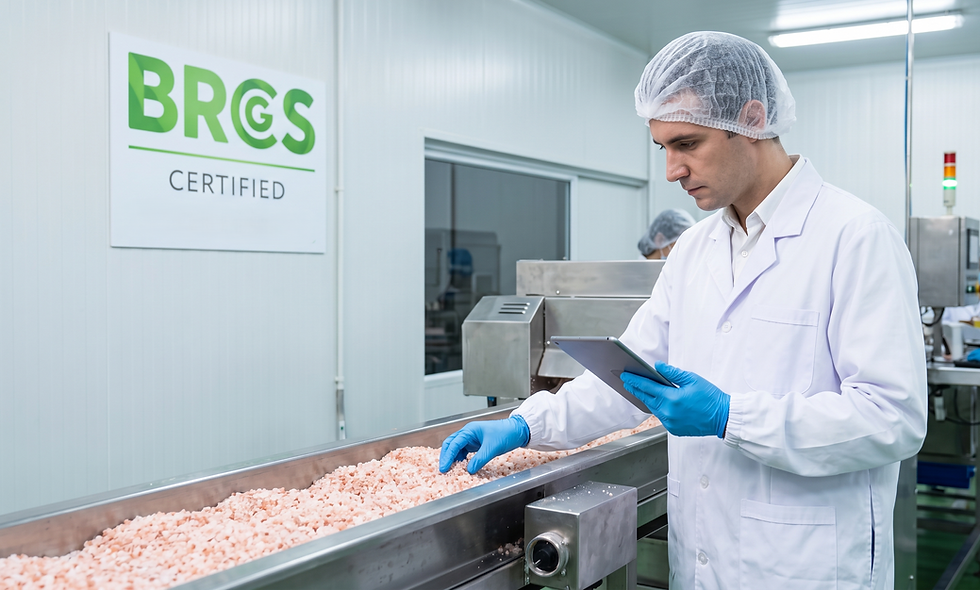
When a brand can point to BRCGS certification with annual independent audits, that's not a marketing claim — it's a documented, externally verified system. That's the difference between "trust us, it's natural" and "here's the audit trail."
Frequently Asked Questions
Is Himalayan salt safe to eat every day?
For most people, yes. The trace heavy metals and minerals present in Himalayan salt are generally well within recognized safety thresholds at typical dietary intake. Brand-specific quality control is what determines whether any individual product stays within those limits.
Does all Himalayan salt come from the same source?
Most authentic Himalayan salt is mined from the Khewra Salt Mine and other Indo-Gangetic salt mines in Pakistan, the only true source of pink salt in the world. However, what happens after extraction — processing, packaging, and quality testing varies significantly by brand, which is where real differences in safety and quality emerge.
Is third-party-tested salt better than salt that just claims to be "natural" or "pure"?
Generally, yes. "Natural" and "pure" are generic terms with no independent verification behind them. Third-party certification, like BRCGS, and independent lab testing provide actual documented evidence of a facility's food safety standards, rather than relying on a brand's own claims.
Does Himalayan salt have microplastics?
It can, despite not being ocean-sourced. Research suggests microplastic contamination in rock salt is more closely tied to mining and processing practices than to the salt's geological origin, which is why facility-level quality control matters more than the "rock salt vs. sea salt" distinction alone.
What makes Selrox different from other Himalayan salt brands?
Our products are produced in a BRCGS-certified facility, independently audited every year against the 12 Fundamental Requirements that BRCGS considers critical to food safety — covering contamination control, traceability, hygiene, and quality management at every stage of production.
What is BRCGS certification, and why does it matter for food products?
BRCGS (Brand Reputation through Compliance Global Standards) is one of the most widely recognized food safety certification programs in the world, used by major retailers and manufacturers to verify supplier standards. Certification requires passing an independent annual audit against a defined set of Fundamental Requirements covering food safety management, hygiene, contamination control, and traceability — making it a documented, third-party-verified standard rather than a brand's self-reported claim.
The Bottom Line

The contamination conversation isn't going away, and it shouldn't, and growing awareness is good for both the consumer and the industry. The real takeaway isn't "rock salt is automatically cleaner than sea salt." It's that geology alone doesn't guarantee safety — facility standards do.
Ask about the certification. Ask about the audits. Ask who's verifying the claims and how often. If a brand can't answer those questions clearly, that tells you something. If they can — backed by documentation like annual BRCGS audits — that's the brand worth trusting with what's on your table.


Comments