
Himalayan Salt for Winter: 8 Cozy Ways to Find Comfort This Fall and Winter
When the leaves turn and the furnace kicks on, most of us start reaching for the same small comforts: a warm drink, a thick blanket, a long bath. Himalayan salt for winter fits right into that routine. It will not replace your doctor or your flu shot, and we would never suggest it should. What it can do is support the simple, time-tested rituals that help many people feel a little more comfortable through the scratchy-throat, dry-skin, stiff-neck months.
Below are nine cozy ways to use Himalayan salt this fall and winter, with an honest look at what the research does and does not say about each one.
1. A Warm Saltwater Gargle for a Scratchy Throat

A saltwater gargle is one of the oldest home comforts there is, and it is one that mainstream medicine still recommends. Mayo Clinic suggests dissolving 1/4 to 1/2 teaspoon of salt in 4 to 8 ounces (120 to 240 mL) of warm water, gargling, and spitting it out. Many people find it eases that raw, scratchy feeling for a while, especially when dry indoor heat is part of the problem.
Use a fine grain, like our Fine Himalayan Pink Salt, so it dissolves quickly in warm water.
Gargle for a few seconds at a time, then spit. Do not swallow it.
Most children under 6 cannot gargle safely, so skip this one for little ones.
Think of it as soothing rather than curative. A small pilot study on saline gargling and nasal rinsing during colds was encouraging, but its authors were clear that larger trials are needed (Ramalingam et al., 2019). If a sore throat is severe, lasts more than a week, or comes with a high fever or trouble swallowing, check in with a healthcare provider.
2. Saline Nasal Rinses, Done Safely
Saltwater nasal rinses are widely used to moisten dry nasal passages and help clear mucus during cold and allergy season. The most important part is the water. The U.S. FDA advises using only distilled or sterile water, or tap water that has been boiled for 3 to 5 minutes and cooled to lukewarm. Plain tap water is not safe for nasal rinsing because rare but serious infections have been linked to it, a point the CDC also stress.
The easiest option is the pre-measured saline packet that comes with your rinse bottle or neti pot.
If you mix your own, follow your device's or pharmacist's recipe and use a pure, non-iodized salt.
Clean and air-dry the device after every use, and ask your provider first if you have a weakened immune system or ear problems.
What about steam?
Leaning over a bowl of hot water is a classic, but a Cochrane review found no clear benefit of heated, humidified air for colds, and bowls of near-boiling water cause real scald injuries every winter. Salt also does not travel with steam, so adding it to the bowl changes nothing. A warm shower is a gentler way to enjoy the same cozy, humid air.
3. Salt Rooms and Halotherapy: Relaxing, With Honest Expectations
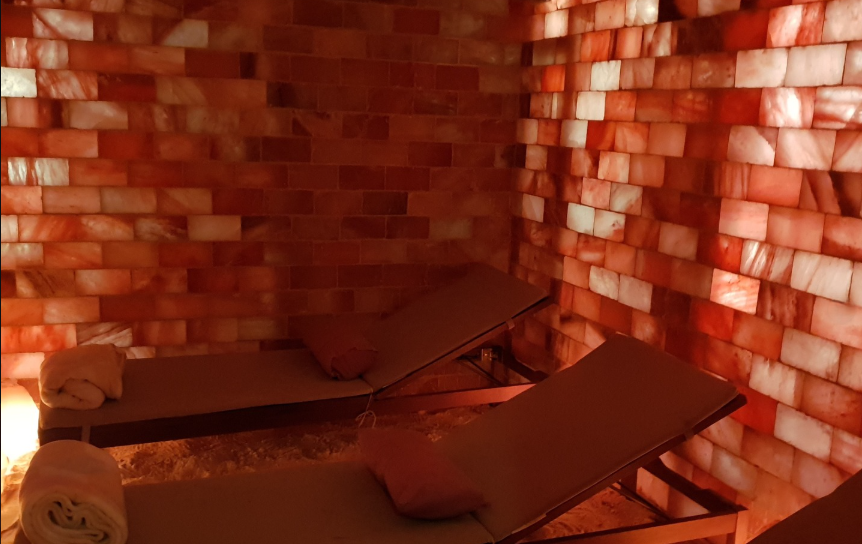
Active dry salt therapy utilizes a halogenerator to grind pure, dry sodium chloride into micro-sized particles, dispersing them into a climate-controlled room to leverage the salt's absorbent, antibacterial, and anti-inflammatory properties. When inhaled, these micro-particles penetrate the respiratory tract to absorb allergens and toxins, reduce inflammation, and clear airways for individuals with conditions like asthma, bronchitis, and COPD. Simultaneously, larger and smaller airborne salt particles land on and penetrate the skin, drawing in moisture, neutralizing bacteria, boosting micro-circulation, and accelerating cell rejuvenation to help manage skin conditions such as acne, eczema, and psoriasis.
According to the Salt Therapy Association, incorporating Halotherapy into a regular wellness routine can provide relief for many individuals suffering from various respiratory conditions—including asthma, allergies, the common cold, bronchitis, COPD, cystic fibrosis, sinusitis, ear infections, and smoker's cough—with optimal results relying on low concentration, gradual administration of dry salt, and consistent sessions.
If you are dreaming of a salt room for your spa or home, take a look at our salt caves and halotherapy builds and salt bricks and walls.
4. A Warm Himalayan Salt Bath for Aching Muscles and Dry Winter Skin

After shovelling the driveway or a long walk in the cold, a warm bath is hard to beat. Warm water itself is what most people feel first: it relaxes tight muscles and helps you wind down before bed. Dissolving 1/2 to 1 cup of coarse Himalayan pink salt in the tub adds a spa-like feel that many people love.
For dry winter skin, the National Eczema Association recommends keeping baths lukewarm and short, patting skin dry, and moisturizing right away. It also notes that salt can sting cracked or inflamed skin, so skip the salt if you have open patches or an eczema flare.
Himalayan salt vs. Epsom salt: what is the difference?
Epsom salt is magnesium sulfate, while Himalayan salt is mostly sodium chloride with small amounts of other minerals. You will often read that minerals from either one soak through the skin, but a 2017 review found little scientific support for meaningful absorption that way. Choose whichever feels nicest to you. For a deeper comparison, see our guide to Epsom salt vs. Himalayan salt.
5. Gentle Salt Scrubs and Soaps for Dry Skin
Winter flakiness on elbows, knees and heels responds well to gentle exfoliation followed by a good moisturizer. A simple scrub of fine Himalayan salt mixed with a little coconut or olive oil, massaged lightly over damp skin once or twice a week, leaves skin feeling smoother. Keep scrubs off your face and away from broken, irritated or eczema-prone skin. For everyday washing, our Selura Himalayan salt soaps bring a touch of that mineral-rich spa feel to the shower. Looking for recipes? Try our DIY Himalayan salt scrubs.
6. Heated Salt Pillows and Neck Rolls for Stiff Shoulders

Cold weather has a way of making shoulders creep up toward our ears. Gentle warmth is a well-known comfort for that stiffness: a Cochrane review found moderate evidence that heat wraps can ease short-term back pain and stiffness. A Himalayan salt massage pillow or salt neck roll holds warmth nicely and has a soothing, weighted feel across the neck and shoulders.
Follow the warming instructions that come with your pillow, and test the temperature on your inner wrist first.
Use it for about 15 to 20 minutes at a time, with a layer of fabric between the pillow and your skin.
Do not fall asleep on a hot pillow, and avoid heat on numb skin or if you have diabetes or circulation concerns without checking with your provider.
7. A Salt Lamp Glow for Darker Evenings
As daylight shrinks, a warm amber light can make a room feel instantly more inviting. That is the real charm of a Himalayan salt lamp. You may have read that salt lamps release negative ions that clean the air or lift your mood. Those claims are not supported: Cleveland Clinic explains that lamps do not produce enough negative ions to matter, and chemists at McGill's Office for Science and Society could not detect any.
So we love salt lamps for what they truly are: beautiful, natural, candle-like ambiance for reading nooks and hygge evenings. Keep them away from pets, who may lick them, and turn them off when you leave the room. Browse our Himalayan salt crafts or read our complete guide to salt lamps.
8. Comforting Soups and Broths, Seasoned in Moderation

A bowl of homemade soup is pure comfort, and warm fluids like broth and tea are on Mayo Clinic's list of soothing cold-season self-care. A pinch of pink salt at the end of cooking brightens the flavour of vegetables, beans and broth.
Just keep sodium in view. One teaspoon of salt holds roughly 2,300 mg of sodium, which is the daily upper limit Health Canada recommends for adults, and most of us already get more than that. Taste before you season, especially if you start with store-bought broth. We also suggest skipping trends like daily "sole water": it adds sodium without proven benefits. Plain water, herbal tea and nourishing meals are the best way to stay hydrated.
Bringing It All Together
Fall and winter can be hard on throats, skin and shoulders, but small rituals add up. A warm gargle, a safe nasal rinse, a quiet soak, a heated pillow by the fire, a glowing lamp and a bowl of well-seasoned soup are simple ways to look after yourself as the days get shorter. When you are ready to stock up, explore the Selrox Himalayan Salt Store for culinary, bath and wellness salts made for cozy season.
References
Mayo Clinic. Sore throat: Diagnosis and treatment. Link
Mayo Clinic. Common cold: Diagnosis and treatment. Link
Ramalingam S, et al. A pilot, open labelled, randomised controlled trial of hypertonic saline nasal irrigation and gargling for the common cold. Scientific Reports, 2019. Link
U.S. Food and Drug Administration. Is rinsing your sinuses with neti pots safe? Link
Centers for Disease Control and Prevention. How to safely rinse sinuses. Link
Singh M, et al. Heated, humidified air for the common cold. Cochrane Database of Systematic Reviews, 2017. Link
Cleveland Clinic. What is salt therapy? Link
Rashleigh R, et al. A review of halotherapy for chronic obstructive pulmonary disease. International Journal of COPD, 2014. Link
National Eczema Association. Bathing and eczema. Link
Gröber U, et al. Myth or reality: transdermal magnesium? Nutrients, 2017. Link
French SD, et al. Superficial heat or cold for low back pain. Cochrane Database of Systematic Reviews, 2006. Link
Cleveland Clinic. Are there any health benefits to Himalayan salt lamps? Link
McGill Office for Science and Society. Niagara Falls and the nebulous positive effects of negative ions. Link
Health Canada. Sodium intake of Canadians in 2017. Link
Fayet-Moore F, et al. An analysis of the mineral composition of pink salt available in Australia. Foods, 2020. Link
Salt Therapy Association. Benefits of Salt Therapy. Link


Comments