
From Ancient Caves to Modern Comfort: The Evolution of Himalayan Salt in Healing and Pain Relief
- Dec 26, 2025
- 7 min read

For millennia, salt has been far more than a simple seasoning. To the ancients, it was "white gold," a currency, a preservative, and a potent medicine. While modern science has refined our understanding of sodium chloride, the therapeutic use of rock salt—specifically the mineral-rich variety known today as Himalayan salt—has a lineage that stretches back through the rise and fall of great civilizations. From the sun-baked mudbrick clinics of Ancient Egypt to the subterranean sanatoriums of 19th-century Poland, salt has been a constant ally in the human battle against pain, inflammation, and respiratory distress.
Today, this ancient wisdom has evolved into a sophisticated wellness industry. The raw salt caves of the past have inspired modern salt rooms, and the simple hot compresses of our ancestors have been reimagined as ergonomic salt-filled heat pillows and neck rolls. This evolution represents a fascinating convergence of geology, history, and therapeutic innovation. This article explores the journey of salt as a healing modality, tracing its path from traditional folk medicine to a staple of modern pain management and relaxation.
The Ancient Roots of Salt Therapy
The story of salt in health and wellness begins long before the modern era. Ancient civilizations understood intuitively what science would later confirm: salt is naturally antibacterial, anti-inflammatory, and hygroscopic (moisture-absorbing).
Ancient Egypt: The Preserver of Life
In Ancient Egypt, salt was integral to both life and the afterlife. The Edwin Smith Papyrus, a medical text dating back to circa 1600 BCE, is one of the oldest known surgical treatises. It documents the use of salt as a disinfectant for chest wounds, where it was applied to dry out the injury and prevent infection. The Egyptians utilized Natron, a naturally occurring mixture of salt and minerals harvested from dry lake beds, not only for mummification but also for therapeutic purposes. They prescribed salt-based suppositories, laxatives, and anti-infective ointments, recognizing the mineral's ability to draw out impurities and reduce swelling.
Greece and Rome: The "Common Salt" of Medicine
The Greeks and Romans elevated the use of salt to a daily health ritual. Hippocrates, the father of Western medicine (460 BCE), famously recommended salt inhalation for respiratory issues—a precursor to modern halotherapy. He utilized varying mixtures of salt and water to treat skin conditions and relieve joint pain.
The Romans, renowned for their public bathhouses, understood the value of thermal therapy combined with mineral salts. Roman soldiers, often paid in salt (the origin of the word "salary"), would soothe their battle-weary muscles in hot mineral springs. Roman physician Dioscorides, writing in the 1st century AD, documented mixing salt with honey, vinegar, or oil to create topical remedies for skin diseases and digestive ailments. These early applications established the foundational principle that salt, when applied to the body, could modulate fluid balance and reduce physical distress.

Ayurveda and the Himalayas
In the East, specifically within the Ayurvedic tradition of the Indian subcontinent, rock salt (often referred to as Saindhava Lavana) held a prestigious position. Unlike common sea salt, which was considered heating, mineral-rich rock salt from the Himalayan foothills was viewed as cooling and balancing for the body's doshas (energies). It was used in compresses and dietary therapies to improve digestion and calm inflammation. This historical preference for rock salt foreshadowed the modern global demand for Himalayan pink salt, prized for its purity and trace mineral content.
The Birth of Halotherapy (Salt Therapy)
While topical applications were common in antiquity, the systematic use of dry salt air for respiratory and immune health—known as Halotherapy—has a distinct and verifiable origin story rooted in 19th-century industrial history.

The Wieliczka Discovery
The pivotal moment for modern salt therapy occurred in 1843 in Poland. Dr. Feliks Boczkowski, a physician at the Wieliczka Salt Mine, made a startling observation. He noted that while coal miners and metalworkers suffered from severe respiratory diseases (such as black lung), the salt miners at Wieliczka remained remarkably healthy. They exhibited almost no respiratory issues, despite working long hours underground.
Boczkowski deduced that the constant inhalation of dry, micronized salt dust in the mine’s microclimate was responsible for their robust health. The salt particles, he theorized, were acting as an expectorant and anti-inflammatory agent for the respiratory tract. Based on these findings, he founded the first pulmonary sanatorium deep within the Wieliczka mine. This practice became known as Speleotherapy (from the Greek speleos, meaning cave).
From Cold War Bunkers to Modern Clinics
The efficacy of salt mines was further cemented during World War II. In Germany, Dr. Karl Hermann Spannagel noticed that civilians using the Klutert salt caves as bomb shelters saw significant improvements in their asthma and bronchitis. Following the war, this observation sparked a wave of research in Eastern Europe and Russia.
In the 1980s, the Odessa Science Research Institute in Ukraine developed the first "halogenerator"—a machine capable of crushing salt into microscopic particles and dispersing them into the air. This invention allowed the therapeutic environment of a salt mine to be replicated in any room, giving rise to the modern "salt rooms" and "salt caves" found in spas worldwide today.
The Science of Salt and Heat
Parallel to the development of respiratory salt therapy was the evolution of topical salt for pain relief. This is where the physics of the salt crystal becomes crucial.
Thermal Properties of Salt
Salt is an excellent thermal conductor with a high specific heat capacity. This means it can absorb and hold a significant amount of thermal energy and release it slowly. Unlike a hot water bottle, which can cool down relatively quickly, or a gel pack that might sweat, dry salt crystals provide a "dry heat."
Dry heat is particularly effective for muscle tension because it penetrates deep into the tissue without causing the skin maceration (softening due to moisture) that can occur with wet heat. When salt is heated, the crystal structure creates a sustained, uniform warmth. This heat triggers vasodilation—the widening of blood vessels.
The Physiological Response
When a heated salt pack is applied to a tense neck or aching back, the following physiological cascade occurs:
Increased Blood Flow: Vasodilation brings a surge of oxygen and nutrients to the injured or tense muscle fibers.
Metabolic Flush: The increased circulation helps flush out metabolic waste products like lactic acid, which contribute to muscle soreness.
Sensory Blockade: The sensation of heat stimulates thermoreceptors in the skin. These signals race to the brain faster than pain signals, effectively "closing the gate" on pain perception (a concept known as the Gate Control Theory of Pain).

The Modern Evolution: Salt Pillows and Neck Rolls
In the last two decades, the wellness industry has successfully miniaturized the "salt cave" experience and combined it with the ancient wisdom of hot compresses. This has resulted in the creation of Himalayan salt-filled therapeutic products, such as heat pillows, neck rolls, and stone massage tools.
Why Himalayan Salt?
Modern therapeutic products almost exclusively use Himalayan pink salt. Geologically, this salt is mined from the Salt Range in Pakistan, the remnants of a prehistoric lagoon from the Permian period (approx. 250 million years ago). Its pink hue comes from trace minerals, primarily iron, magnesium, potassium, and calcium.
While the nutritional difference between Himalayan salt and table salt is often debated, its physical structure makes it superior for therapeutic pillows. The coarse crystals are hard and dry. They do not turn to mush when heated (unless exposed to direct moisture), and their granular texture provides a gentle massage effect when pressed against the body.
The Mechanics of the Salt Pillow
A modern Himalayan salt pillow is typically a heavy, durable cotton or linen casing filled with coarse salt crystals. Its evolution represents a significant upgrade from the wet, messy salt poultices of the Roman era.
Dry Heat Application: These pillows are designed to be heated, usually in a microwave for 1-3 minutes or an oven to approximately 50°C - 60°C (120°F - 140°F). The salt retains this heat for about 20 minutes, providing a therapeutic window ideal for relaxing the trapezius muscles (neck) or lumbar region (lower back).
Cold Therapy (Cryotherapy): Conversely, because salt holds temperature well, these products can be frozen. A frozen salt neck roll reduces inflammation and swelling in acute injuries (like a sprain) by constricting blood vessels, offering a dual-purpose tool for pain management.
Deep Tissue Stimulation: Unlike a soft electric heating pad, a salt roll is firm. When a user lies on a salt neck roll, the weight of the head presses the neck muscles against the crystals. This creates an acupressure effect, physically releasing trigger points in the muscle fascia while delivering heat.
Ear and Sinus Relief
A specific adaptation of this technology is the "salt ear pillow." Drawing on the hygroscopic (water-attracting) nature of salt, these smaller pillows are heated and placed over the ear during an ear infection. The theory, supported by traditional German folk medicine practices (Salzäckchen), is that the warm salt creates a micro-environment that draws out fluid and humidity from the ear canal, reducing pressure and pain while the heat soothes the inflammation.
Current Trends and Therapeutic Products
The market for Himalayan salt healing and pain relief has diversified well beyond simple bags of salt.
Himalayan Salt Stones: Used in massage therapy, these smooth, hand-carved stones are heated and used as an extension of the therapist's hands. They offer the benefits of hot stone massage (like basalt stones) but with the added texture and mineral presence of the salt.
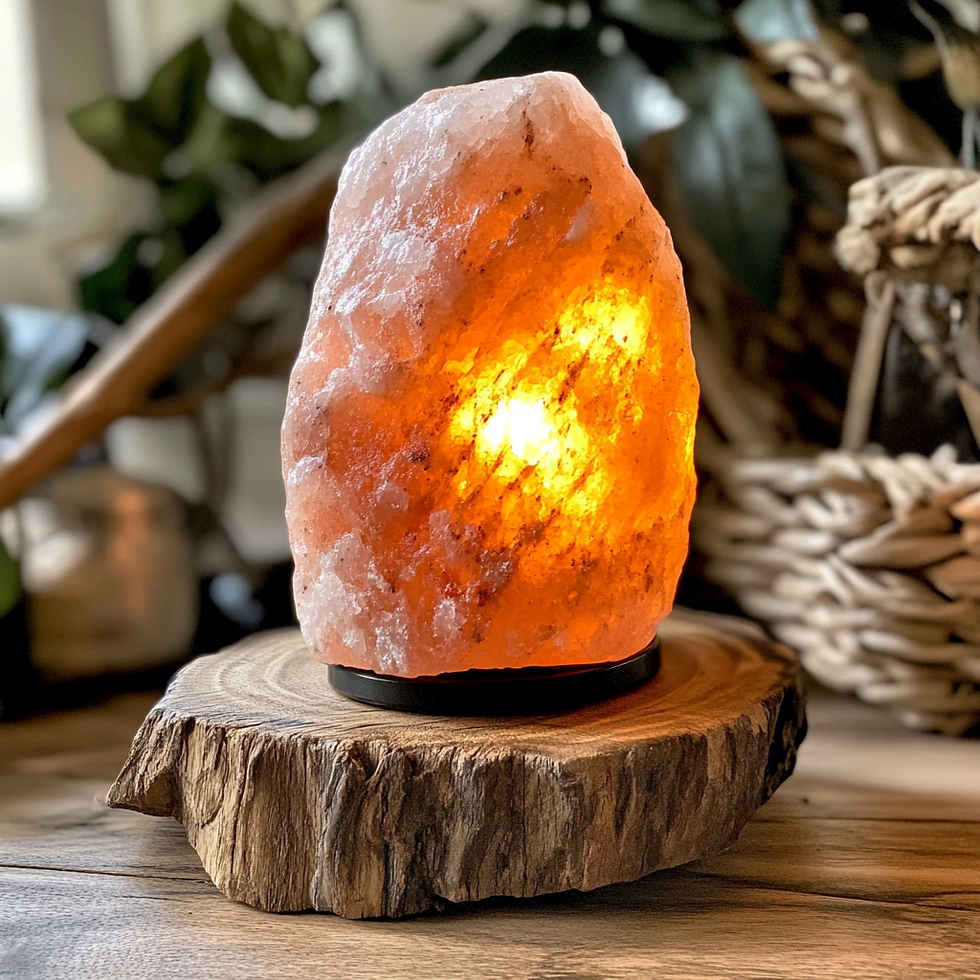
Salt Lamps as Ambient Therapy: While often marketed for air purification, the primary verifiable benefit of salt lamps in a therapeutic context is their hygroscopy and warm, amber light. They help reduce ambient humidity and provide a calming, low-blue-light environment conducive to relaxation and sleep hygiene.
Bath Soaks and "Sole": Returning to the Roman roots, modern "Sole" (a saturated water and salt solution) baths use Himalayan salt to treat skin conditions like eczema and psoriasis. The high mineral concentration can help restore the skin barrier and reduce itching, a benefit acknowledged by the National Eczema Association for salt treatments in general.
The journey of Himalayan salt from the ancient seabeds to the modern living room is a testament to the enduring power of simple, natural remedies. What started as an intuitive practice in Ancient Egypt and a lucky observation in a Polish mine has been refined into a verifiable science of heat and mineral therapy.
Modern therapeutic salt products—specifically heat pillows and neck rolls—are not merely wellness fads. They are the engineered evolution of centuries of medical history. By harnessing the unique thermal properties of salt crystals, they offer a drug-free, non-invasive method to manage the chronic muscle tension and pain that plague modern society. Whether used for the dry heat that releases a stiff neck or the cooling touch that soothes a swollen joint, Himalayan salt remains, as it was for the ancients, a versatile and essential instrument of healing.



Comments