
Frequently Asked Questions About Himalayan Salt
Updated: Aug 29, 2025
Himalayan pink salt has gained popularity over the past few decades. It is recognized not only for its light pink colour but is also associated with wellness, natural living, and gourmet cooking. This salt is now a part of many kitchens, spas, and health routines. Despite its recent popularity, many questions remain about what makes it unique, how it differs from other salts, and whether there is any scientific basis for its health benefits. Below is a detailed guide answering the frequently asked questions about Himalayan pink salt.
Does Himalayan pink salt have iodine?
No, Himalayan pink salt is not iodized. Despite containing trace minerals, the level of iodine in Himalayan pink salt is extremely low. Often below detectable thresholds (less than 0.1 mg/kg). Thus, making it unreliable as a sole dietary source of iodine.
Table salt, in contrast, is fortified with iodine to help prevent iodine deficiency, a condition that can lead to health problems. Due to this, people who rely solely on Himalayan salt for their seasoning may not meet the minimum iodine requirement, unless they consume iodine from other sources, such as seafood, dairy products, eggs, or iodized salt.
So, despite its appealing nature, Himalayan pink salt should be paired with iodine-rich foods to ensure your body’s requirements are met.
Is Himalayan pink salt the same as sea salt?
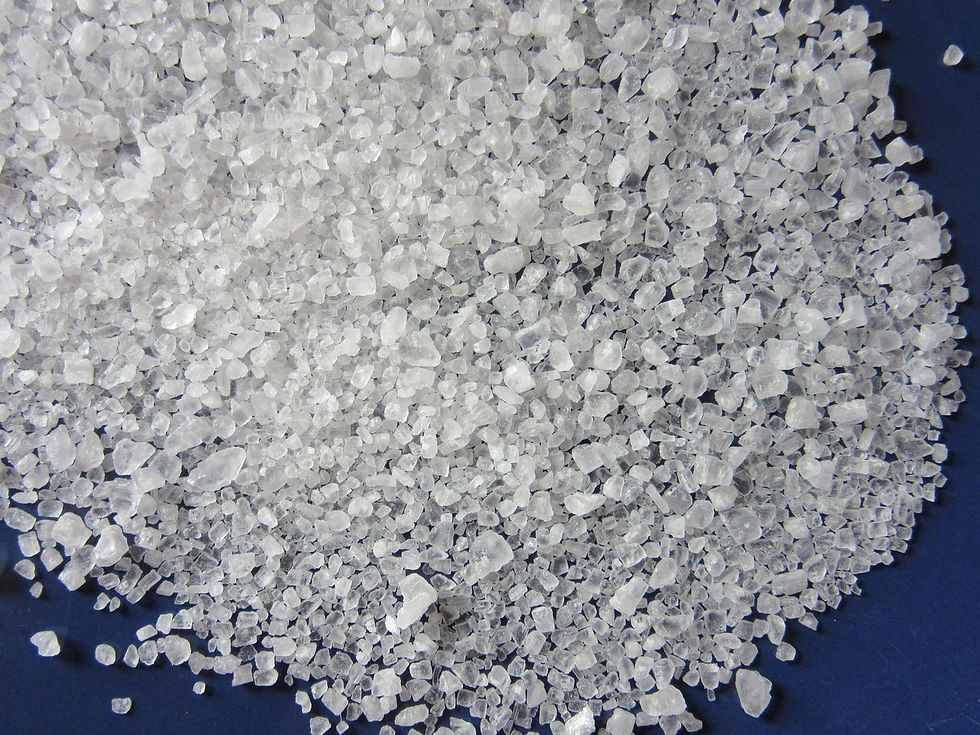
Not quite; although both Himalayan pink salt and sea salt are sodium chloride, their qualities, mineral content, and processing methods differ.
The unique pink salt comes from ancient mineral deposits located in Pakistan’s Salt Range, a region at the base of the Himalayan mountains. It typically contains about 96–99% sodium chloride, and minerals such as calcium, potassium, and magnesium in trace amounts. These minerals are what give the salt its unique pink colour.
Sea salt, on the other hand, is obtained when seawater evaporates. Based on the region it comes from, it may contain varying levels of minerals such as calcium, magnesium, bromide, and sulphate.
Despite the mineral differences, both salts have pretty similar sodium levels and therefore have the same health implications when it comes to blood pressure and sodium intake.

What's the difference between Himalayan pink salt and epsom salt?
Himalayan salt and Epsom salt are very different despite both being called “salts.” Himalayan salt is a natural rock salt mined from Pakistan’s Khewra mine. It is mostly sodium chloride with small amounts of trace minerals like potassium, calcium, magnesium, and iron, which give it its pink color. It is edible and widely used for cooking, seasoning, salt lamps, spa products, and salt therapy rooms.
Epsom salt, on the other hand, is not a culinary salt but a mineral compound called magnesium sulfate. It is typically used for therapeutic purposes, such as soaking in baths to ease sore muscles, reduce inflammation, and support relaxation. Unlike Himalayan salt, it is not used in food; ingestion is limited to specific medical purposes under supervision.
In short, Himalayan salt is mainly culinary and decorative, while Epsom salt is medicinal and therapeutic. They are not interchangeable.

Which Himalayan salt is best for a salt grinder?
For grinders, larger Himalayan pink salt crystals are optimal. They are often labelled as “coarse pink salt.” The larger size ensures that the salt grinds smoothly and evenly. The coarseness makes it so that the salt dissolves gradually in food, which helps enhance the flavours without overwhelming the dish.
On the other hand, fine-grain Himalayan salt often clumps in grinders and dissolves rapidly in food, which gives little control over seasoning. Choosing a reputable brand such as Selrox, which sells consistent, well-sized coarse crystals, will give the best results in both taste and usability.
Does Himalayan pink salt go bad or expire?
Because it is a mineral, salt does not spoil or expire, making it one of the longest-lasting seasonings you can store. Salts in natural form without additives, such as Himalayan pink salt, remain safe for consumption forever.
However, over time, salt can experience changes in texture and flavour if not stored properly. If exposed to moisture, it can lead to clumping. Additionally, salts like Himalayan pink salt may absorb odours from the environment.
To maintain freshness, it is best to store Himalayan pink salt in a cool, dry place inside an airtight container, especially in humid climates. Many brands include a “best before” date on their packaging; this is not because salt goes bad, but rather, it's done to indicate periods of peak quality.
Is Himalayan pink salt Kosher and Halal?
Yes, Himalayan pink salt is Kosher and Halal. This is because it is a pure mineral product with no additives, preservatives, or animal-derived ingredients. Additionally, when mined using standard procedures, the methods don’t conflict with Jewish or Islamic dietary laws.
That said, bear in mind that if you require certified Kosher or Halal products, it is best to look for official certifications on the packaging. This is important since Halal and Kosher considerations include not just the salt but the facility where it was produced and packaged, since an uncertified facility may cause the salt to be exposed to certain ingredients or contaminants that are not Halal or Kosher. If in doubt, it's best to inquire and ask for proof of certification.

Can Himalayan pink salt benefit health in other ways?
According to some people, Himalayan salt provides unique health benefits. Beyond its role in cooking, it is also used in salt lamps, air purifiers, and halotherapy (salt cave therapy). People claim it can improve air quality, reduce stress, or ease respiratory issues. However, scientific evidence for these various uses is limited.
With regards to dietary use, Himalayan pink salt should be treated like any other salt. It contains sodium, which is essential for muscle function, fluid balance, and nerve health, but too much sodium can raise blood pressure and strain the heart and kidneys. Individuals with high blood pressure, kidney conditions, or other sodium-sensitive health concerns should moderate their salt intake regardless of whether it is sea salt or Himalayan salt.
Can Himalayan salt expire or lose nutrition?
While salt itself does not lose its essential properties, fortified salts such as iodized table salt can lose iodine potency over time. Especially if the salt is exposed to moisture or sunlight. As Himalayan pink salt is not iodized, it does not face this problem.
That said, it is essential to store it properly. If it is not stored properly, Himalayan salt may absorb moisture, leading to clumping, texture changes, or contamination. Thus, it is ideal to store the salt in air-tight containers.
Who should be cautious when using Himalayan pink salt?
Certain groups should monitor their Himalayan pink salt intake:
People with iodine deficiency: Since Himalayan salt contains less iodine compared to table salt, relying on it alone could worsen deficiencies.
Individuals with cardiovascular or kidney conditions: Excess sodium can worsen these conditions.
Those on a medically prescribed low-sodium diet: Himalayan salt has the same sodium content as table salt and should not be considered a “safe” alternative.

Why is Himalayan pink salt pink?
The light pink colour of Himalayan salt is all thanks to the trace minerals, particularly iron oxide, as well as small amounts of calcium, magnesium, and potassium. These minerals, although they give it a prominent colour, are present in very small amounts and typically hold no nutritional value when eaten.
Is Himalayan salt safe for children?
Yes, Himalayan salt is safe for children when consumed in moderation as part of a balanced diet. However, because it does not contain as much iodine as table salt, it is important to ensure children receive iodine from other sources, such as seafood. This is especially important during the development stages of children, as iodine is crucial for brain development.

Should Himalayan pink salt be a part of a healthy diet?
Yes, Himalayan pink salt can be part of a healthy diet when used in moderation. It adds flavour and aesthetic appeal to meals, but it should not replace iodized salt entirely unless other iodine-rich foods are consumed regularly.
What practical benefits does Himalayan pink salt offer?
Additive-free purity: Himalayan salt is less processed and contains no additives.
Visual appeal: Its pink hue and crystal formations make it attractive for plating, table displays, and gourmet presentations.
Subtle mineral flavour: Trace elements contribute to a mild, distinctive taste.
Culinary versatility: Large crystals add bursts of flavour and can be used in grinders, rubs, or as finishing salt.
Unique cooking uses: Salt slabs can be heated to cook or used as serving platters that retain heat or cold.

What are the non-food uses of Himalayan Pink Salt?
Bath Salts
Himalayan salt is often added to warm baths or foot soaks. Many users claim it helps soften skin, ease muscle tension, and promote relaxation. Its mineral content may help soothe skin conditions such as mild eczema or acne.
Body Scrubs
When it is mixed with natural oils, Himalayan salt makes for an effective exfoliant that gently removes dead skin cells while improving circulation.
Salt Lamps
According to many people, large crystals carved into lamps are said to improve air quality and mood. While scientific proof is limited, many people find them calming and aesthetically pleasing.
Halotherapy (Salt Caves)
Himalayan salt is used in spa settings where people breathe in salt-infused air. Supporters believe it helps respiratory conditions, though more research is needed.

Are Himalayan salt baths beneficial?
Himalayan salt baths are widely used for wellness. These baths may help:
Reduce inflammation and minor muscle soreness.
Provide relief for mild skin conditions such as psoriasis.
Promote relaxation and reduce stress.
Improve sleep quality by calming the nervous system.
While scientific evidence is limited, many people report positive effects from using Himalayan salt baths.
Can Himalayan salt help with insect bites or skin irritation?
Yes, soaking in water infused with Himalayan pink salt may provide relief from bug bites, rashes, or minor skin irritations. The salt’s mild antimicrobial properties may help reduce itching and redness.
Does Himalayan salt support hydration?
Salt is essential for maintaining fluid balance and electrolyte function. Some wellness advocates use Himalayan salt in homemade electrolyte drinks or add a pinch to water to help with hydration after exercise. Although hydration mainly comes from drinking water and eating a balanced diet.
What are best practices for using Himalayan Pink Salt?
Use in moderation: Treat it like any salt and avoid excessive sodium intake.
Pair with iodine-rich foods: Compensate for its lack of iodine with seafood, dairy, or iodized salt.
Store properly: It is essential to store it in an airtight container away from moisture.
Choose coarse grains for grinders and scrubs. Fine salt is best for recipes; coarse crystals work better for grinders or body scrubs.
Himalayan pink salt is not just a kitchen seasoning. Its distinctive colour, trace minerals, and wide range of uses, from cooking to spa treatments, make it a favourite among health-conscious consumers and chefs alike. Whether it is sprinkled on a dish, dissolved in a relaxing bath, or displayed as a decorative lamp, Himalayan pink salt offers both beauty and functionality.


Comments